- 17 October 2023 11:31
Fines for lawyers - What is the practice of international law?
-

- 1 July 2021 17:47
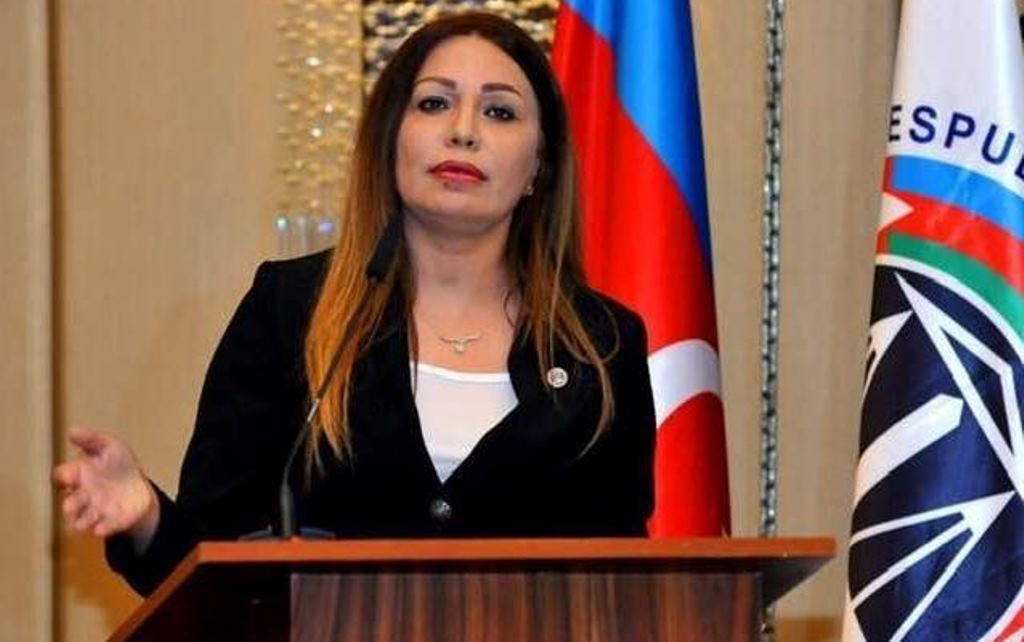
As it is known, in recent days, the draft law “On Amendments to the Code of Civil Procedure of the Republic of Azerbaijan” envisages a provision to fine a lawyer for making clearly unfounded petition, which has caused a wide discussion in the legal community.
What is the status of an advocate in civil proceedings and can he be fined by a court for his written or oral appeals or speeches in connection with the provision of legal aid in the carring out of his professional duties?
According to Article 26 of the Constitution of the Republic of Azerbaijan, everyone has the right to defend his/her rights and freedoms by methods and means not prohibited by law.
According to Article 61 of the Constitution, everyone has the right to receive qualified legal assistance. As it is known, this constitutional guarantee given to our citizens is realized by the activity of lawyers.
According to Article 5 of the Law of the Republic of Azerbaijan “On Advocates and Advocacy activities”, is carried out on the basis of entrusting a lawyer with the protection or representation of the rights and interests of persons applying for legal assistance and in accordance with their instructions.
Pursuant to paragraph 3 of Article 4 of the same Law, lawyers are involved in the following issues related to the provision of legal assistance:
in representation of individuals and legal entities in state and non-state bodies and organizations, as well as in foreign countries and international organizations;
giving oral and written advice, explanations and references on legal issues;
in the preparation of applications, complaints and legal documents;
in providing necessary legal assistance to individuals and legal entities, in providing legal support for their activities;
in the provision of other types of legal assistance.
Pursuant to Article 61 of the Criminal Procedure Code of the Republic of Azerbaijan, a lawyer is considered as a participant in the proceedings, not as a party, but as another participant in the proceedings and lawyers can attend."
An official of the Supreme Court of the Republic of Azerbaijan made a statement to the press on the issue under investigation that he referred to the experience of a number of countries, including Ukraine, the United States, France, Belgium and Russia as the world's practice of fining a lawyer for filing an unfounded petition in court.
Article 244.22 of the Code of Civil Procedure of the Russian Federation provides for the abuse of procedural rights by a group of persons (not a lawyer, for example, if a representative of any public association, such as the Public Union of the Disabled, has filed a lawsuit in the interests of war invalids) implies a fine that this norm does not apply to the lawyer at all. It is not possible to equate a lawyer with a person who makes a claim based on the interests of a group of people. (Look: https://www.consultant.ru/document/cons_doc_LAW_39570/bb6410e5d2b36082fc8128aa59e21533734ddfde/)/ )
Article 11 of the US Federal Civil Procedure Code, referred to in the interview, states that a lawsuit is not against the applicant or his attorney being fined "for making an unfounded petition," but on whether or not the attorney is required to sign the disputed document, as far as it is known, in order to confirm that the facts stated in the document are sufficient to defend this document, it is envisaged to bring to disciplinary responsibility in case of refutation of these facts by the testimony of at least 2 witnesses. Apparently, this document does not impose a fine on the lawyer by the court, but the fact that he knows that the information in the signed document is not true that, a similar norm is enshrined in the Law of the Republic of Azerbaijan “On Advocates and Advocacy activities” and in the “Regulations on the Rules of Conduct of Advocates”, which regulate the activities of lawyers in the Republic. (Look: https://constitutions.ru/?p=7745)
Articles 32-1 of the Belgian Judicial Code and the French Code of Civil Procedure, referred to in the interview, refer to the imposition of a fine on a side who, for the purpose of the interview, delays a public trial or uses it for illegal purposes. Apparently, these provisions provide for the imposition of a fine not on the advocate, but on the side involved or his representative, and not on the submission of "clearly unfounded petition", but on the failure to perform their procedural functions or abuse of procedural rights.
As can be seen from Article 61 of the Criminal Procedure Code of the Republic of Azerbaijan, referred to above, an advocate in a civil process is not a person involved in the case, but another participant in the process. That is, the advocate can represent the side involved in the case, which is due to the execution of the order to provide legal assistance to that person. However, in no case is a lawyer not only a representative, but also another participant in the process of providing legal assistance to the side and representing him, a person with a special status. Representation in court is provided for in Chapter 6 of the Criminal Procedure Code of the Republic of Azerbaijan. The powers of the representative are provided for in Article 74 of the same Code, and the rights of the advocate are provided for in Article 68.
As can be seen from the content of these provisions, a lawyer has rights and a representative has powers. If the person providing legal assistance also gives the advocate the power of representation, it does not mean that the advocate turns and becomes a side or a representative of the side in the process. An advocate can also represent a side. However, in each case, he is another participant in the process as an advocate. Under no circumstances may a representative or side be equated with an advocate.
Similarly, Articles 21.5 and 120 of the Criminal Procedure Code of the Republic of Azerbaijan, cited in the interview, provide for the imposition of a fine on a side for the abuse of procedural rights for a protest whose arguments are already fabricated. That is, this norm is established in our procedural legislation in accordance with world practice. At present, in addition to this norm, the imposition of a fine on an advocate with a special status who is not a party to the proceedings is completely contrary to the international principles of advocacy.
As mentioned above, according to Article 61 of the Criminal Procedure Code of the Republic of Azerbaijan, an advocate is not a side to the process, but another participant in the process.
As can be seen, in international practice, there is no practice of fineing an advocate by a court or other body with any administrative or civil liability in connection with the performance of his or her professional activities as a subject of civil proceedings. This is due to the fact that the advocate must be independent in the performance of their professional duties, free from any pressure and intimidation.
The Preamble to the Charter on the Basic Principles of the Legal Profession in Europe states that "the advocate has a special role in societies where the rule of law prevails. The duty of an advocate is not only to begin and end his duties in good faith to the extent permitted by law. In addition to serving the interests of justice, an advocate must both represent the interests of the person who appealed to him in court and be an adviser to that person. Respect for the professional activity of a lawyer is a prerequisite for the rule of law and democracy in any society.”
The section of the Charter, entitled Independence of the Lawyer, states that the principle of the Lawyer's independence and freedom in the conduct of the client's work must be politically, economically and intellectually independent in relation to the activities of advising and representing the client. Advocacy in an independent profession and its membership in an organization such as a bar association should generally be a guarantee of the independence of this activity. The organization of self-government in the field of advocacy is of vital importance in ensuring the independence and freedom of advocates individually.
As can be seen from the provisions of the Charter, an advocate may be subject to disciplinary action only by the body of which he is a member in connection with the performance of his professional duties. Punishment of an advocate by any body outside this body undermines his or her independence and harms those to whom he or she provides legal assistance, rather than the advocate.
In this regard, the "Havana Rules" on the Basic Principles of Advocacy, adopted at the 8th UN Conference on August 27-September 7, 1990, are important and provide a concrete answer to the issue under discussion. The section of the Rules of guarantees of advocates in connection with the fulfillment of their obligations, ie paragraph 16 of the Rules, states that:
(a) Each State Party shall ensure that advocates are able to carry out their professional activities under conditions free from all threats, obstacles and intimidation;
(c) Advocates shall not be subject to any judicial, administrative or economic sanctions for any act in connection with their professional activities.
According to Article 18, advocates cannot be equated with the interests of their clients and clients in the performance of their functions.
Pursuant to Article 20, advocates are immune from civil and criminal penalties for their written and oral statements and petitions in court, tribunal or other legal and administrative body in connection with the performance of their professional duties.
Apparently, this document, which is important for all UN member states, directly establishes the immunity of advocates from civil and criminal penalties for their written and oral statements and petition in court, tribunal or other legal and administrative bodies in connection with the performance of their professional duties. In this case, how can the Code of Civil Procedure of the Republic of Azerbaijan provide for the punishment of an advocate for “clearly unfounded petition”, ie for filing a petition in connection with the performance of his professional duties?
As stated in the reference document, an advocate may in no case be equated with the person to whom he or she provides legal assistance or with his or her interests. The speeches made by the lawyer in court in connection with the performance of his professional duties, the petitions filed by him are the actions performed on the instructions of the person providing legal assistance, not his personal position. An advocate may be subject to disciplinary action by the body of which he is a member for unprofessional drafting of these documents. However, in no case can an advocate be punished by a court, even if we do not take into account the fact that it is important to discuss and evaluate whether the petition is well-founded or unfounded. This can seriously damage a advocate's reputation and undermine people's trust in the advocate, make the advocate dependent on the judge, destroy his immunity, and deprive him of the "umbrella of protection" established by international law.
While researching the current issue, I was attracted by the scientific article of the Turkish advocate Mehmet Altundish, entitled "The Obligation of Explaining Advocates' Thoughts in a Perfect and Objective Form". As the article points out, the failure of a lawyer to say a word about legal aid to a person in court for fear of punishment would impede the administration of justice. In this regard, punishing a advocate for what he or she says or does while representing a client is more damaging to the person he or she is providing legal assistance than to the advocate.
It is possible for an advocate to make a negative assessment of any other individual while protecting the rights of the person he / she represents. If such assessments and accusations are not related to his or her defense of any individual or claim, only then can the defense be considered to have been exceeded. The advocate's statements or statements in defense of the person he or she is providing legal assistance benefit from the "umbrella of protection." For this reason, only speeches, writings and statements that do not enjoy immunity beyond the rights of the plaintiff and the defense may be held liable. It is important to exercise the right to sue and defend without any outside influence. In any case, the advocate must file a claim and defend before the courts without any concern. (https://dergipark.org.tr/en/download/article-file/1121378)
As can be seen, the establishment in the Code of Civil Procedure of the Republic of Azerbaijan of the norm of penalizing a lawyer by a court for “overtly unfounded petition” is completely contrary to generally accepted international principles and world practice. Identifying an advocate with a representative or side, undermining his or her independence, can result in a loss of people's trust in the advocate.
Ilhama Hasanova
Member of the Bar Association of the Republic of Azerbaijan, Deputy Chairman of the Lawyers Disciplinary Commission


Similar news


- 17 February 2023 17:14
On the initiative of Anar Baghirov, CCBE announced a campaign to help Turkiye
.jpg)

- 17 September 2022 20:13
Chairman: "The decision of the court regarding lawyer Elchin Sadigov's issue is commendable"


- 7 March 2022 22:10